 Battery
 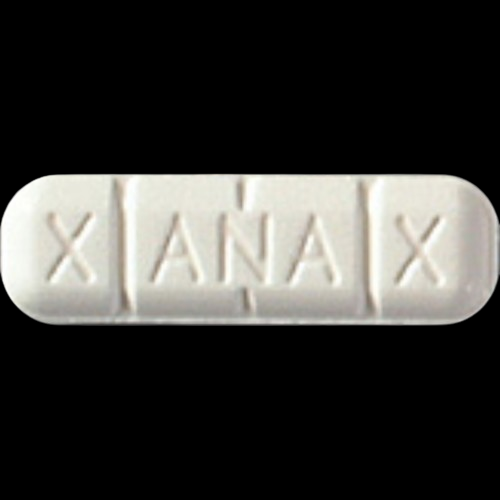 Xanax (2mg) - 1
  GHB 100ML
The Science of Altered States
Altered states of consciousness have existed for as long as humans have reflected on their inner lives. Dreams, meditation, trance, flow, prayer, and intense emotional experiences all demonstrate that consciousness is not a single, fixed mode. It is flexible, responsive, and shaped by context.
Modern science is now taking altered states seriously—not as anomalies, but as keys to understanding how consciousness works. Psychedelic research plays a central role in this shift because it reliably produces altered states that can be studied under controlled conditions.
The science of altered states is not about escaping reality. It’s about understanding how reality is experienced.
Consciousness Is Not Binary
For much of modern history, consciousness was treated as binary: awake or asleep, conscious or unconscious.
Neuroscience now recognizes consciousness as a spectrum.
Altered states exist between and beyond ordinary waking awareness, involving changes in:
- Attention
- Perception
- Emotion
- Sense of self
- Time awareness
Rather than being errors or breakdowns, these states reveal how consciousness reorganizes when usual constraints are relaxed.
How the Brain Produces Altered States
At a neurological level, altered states involve changes in how brain networks communicate.
Research using brain imaging has shown that altered states—particularly those induced by psychedelics—are associated with:
- Increased global connectivity
- Reduced dominance of habitual control networks
- More flexible information flow
This allows regions of the brain that don’t normally interact to exchange information, creating novel patterns of perception and understanding.
Altered states emerge not from chaos, but from reorganization.
The Role of Predictive Processing
One influential theory in neuroscience describes the brain as a predictive system. Rather than passively receiving information, the brain constantly predicts what it expects to perceive and updates those predictions based on sensory input.
Altered states appear to disrupt this predictive dominance.
When predictions loosen:
- Sensory information becomes more vivid
- Expectations exert less control
- Experience feels less automatic
This reduction in prediction helps explain why altered states feel surprising, immersive, and emotionally rich.
Altered Attention and Awareness
Attention plays a central role in consciousness.
In everyday life, attention is fragmented—split between tasks, worries, and internal dialogue. Altered states often involve a reorganization of attention, where awareness becomes:
- More focused
- More immersive
- Less divided
This shift in attention amplifies experience. When awareness is undivided, even simple moments feel significant.
The science of altered states shows that attention is not just a function of will—it is a property of neural organization.
Emotion as a Structural Component
Emotion is not an add-on to consciousness; it shapes how experience is structured.
Altered states often involve heightened emotional salience, meaning experiences feel personally relevant. This emotional engagement:
- Deepens memory encoding
- Strengthens meaning
- Influences interpretation
From a scientific perspective, emotion helps determine what matters. Altered states modify this prioritization, allowing different aspects of experience to come into focus.
Time Perception and Neural Dynamics
Altered states frequently involve changes in how time is experienced.
Neuroscience suggests this occurs because time perception depends on predictive sequencing. When the brain stops constantly forecasting what comes next, time feels less linear and more expansive.
This shift has measurable neural correlates and demonstrates that time perception is a constructed feature of consciousness, not an objective clock.
Identity as a Neural Process
One of the most profound insights from altered state research is the realization that identity is not fixed.
The sense of “self” is maintained by specific neural processes related to memory, narrative, and self-reference. Altered states often reduce the dominance of these processes, making identity feel:
- Less rigid
- More contextual
- More observable
This reveals identity as a function of brain activity rather than an immutable essence.
Altered States and Learning
From a scientific perspective, altered states may enhance learning—not by adding information, but by increasing plasticity.
When rigid neural patterns loosen, new associations become possible. This has implications for:
- Creativity
- Emotional learning
- Behavioral flexibility
Altered states provide a temporary window where learning can occur differently—not faster, but more integratively.
The Importance of Context and Integration
Science makes clear that altered states are not inherently beneficial or harmful. Their impact depends on context.
Research emphasizes:
- Preparation and expectation
- Environmental safety
- Psychological readiness
- Integration afterward
Without integration, altered states can feel disorienting. With integration, they can inform long-term understanding.
Altered states reveal possibilities; integration determines outcomes.
Why Altered States Matter to Science
Altered states matter because they challenge assumptions about consciousness.
They show that:
- Awareness is dynamic
- Perception is constructed
- Identity is flexible
- Meaning is contextual
These insights extend beyond psychedelics, influencing psychology, philosophy, and neuroscience more broadly.
By studying altered states, science gains insight into the mechanisms of consciousness itself.
What Altered States Are Not
It’s important to clarify what altered states are not:
- They are not delusions
- They are not escapes
- They are not breakdowns of reality
They are variations of consciousness—structured, interpretable, and meaningful within context.
Conclusion
The science of altered states reveals consciousness as a process rather than a fixed condition.
By altering how attention, prediction, emotion, and identity interact, these states expose the architecture of experience itself.
Consciousness is not something we have.
It is something we do—moment by moment.
And altered states allow us to see how that process unfolds.
Available for delivery across Canada only.
🛒 Buy Now
💸 20% off the entire store — no minimum
Promo Code: BLOG20